

By turning spent coffee grounds into clean, renewable fuel, our RocketRoast technology eliminates fossil fuels from the roasting process—creating exceptional coffee while actively removing carbon from the atmosphere. Every roast helps transform yesterday’s waste into a better cup and a healthier planet.
We Created
the World's First
Carbon-Negative
Coffee Roaster.
Our Commitment to Responsible
Roasting
At Climate Coffee, our mission is to rewrite the future of brewing by transforming the coffee industry from a linear, carbon-heavy footprint into a completely closed-loop, regenerative ecosystem. We turn yesterday's spent coffee grounds into the clean energy needed to roast tomorrow's beans—completely eliminating fossil fuels and grid electricity. We are creating a truly regenerative ecosystem. We believe in crafting an exceptionally pure cup of coffee that tastes better than traditional cups of coffee, leaving the Earth better than we found it and moving together in a perfect circle.


Discover the Difference
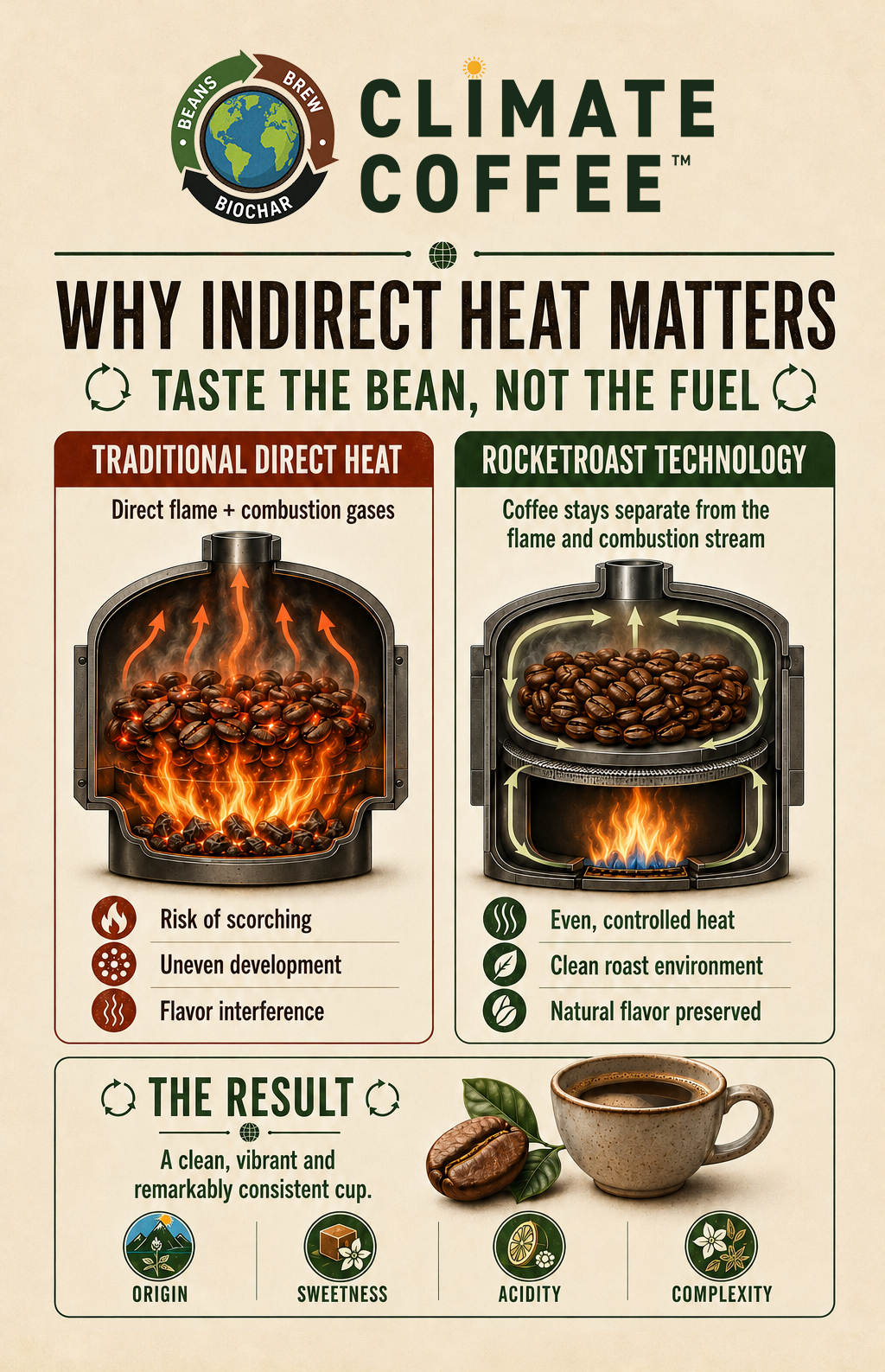
Not all coffee is roasted the same—and the difference goes far beyond flavor. Traditional roasters rely on fossil fuels, while many modern electric systems still depend on carbon-intensive grid power. Direct-fired roasting can also expose beans to combustion gases and intense heat, increasing the risk of scorching and allowing volatile hydrocarbons to subtly interfere with their natural flavor profiles.
Climate Coffee takes a different path. We transform spent coffee grounds into clean energy and use an indirect heating method that keeps the beans separate from the flame and combustion gases. This controlled, even heat helps prevent scorching and burning while preserving roast consistency and the coffee’s natural sweetness, complexity, and origin characteristics.
The result is exceptionally pure coffee, zero fossil fuel heat exposure, valuable agricultural biochar instead of waste, and the potential to generate carbon credits—all within a regenerative, closed-loop system designed to build a cleaner future for coffee.
Taste the
Difference

The heat source matters. Think about a steak cooked over charcoal versus one cooked on a propane grill—or a pizza baked in a wood-fired oven instead of a gas oven. Charcoal gives steak a distinctive, fire-kissed character, while a wood-fired oven creates the crisp crust, subtle smokiness, and depth of flavor that define great artisan pizza. Gas can sometimes introduce subtle combustion-related notes that some describe as chemical or “gassy.” The fuel—and how its heat reaches the food—can influence the final taste.
Propane and other naturally odorless fuel gases are commonly treated with ethyl mercaptan, also known as ethanethiol (don't worry, we couldn't pronounce it either), to give leaks their unmistakable rotten-cabbage or skunk-like warning odor. Ethanethiol is highly flammable and can irritate the eyes, nose, throat, and respiratory system at elevated concentrations. Greater exposure may cause headaches, nausea, dizziness, or weakness. Why would you want to eat or drink something you can't pronounce, or even worse, that can potentially lead to major health risks?
Coffee is no different. Traditional natural-gas or propane roasters can expose beans to direct flame, intense heat, and combustion byproducts, increasing the risk of scorching or burning while potentially affecting flavor and roast consistency. At Climate Coffee, recycled spent coffee grounds generate zero-fossil-fuel heat that is transferred indirectly to the beans. This controlled roasting method separates the coffee from the open flame and combustion stream, helping prevent scorching while promoting a smooth, even roast. The result is a clean, vibrant cup that allows each bean’s natural origin, sweetness, and complexity to shine.